
In breastfeeding, things do go wrong. It is the many mistakes we make that results in hitches in our breastfeeding journey. I must say that not much attention is paid to breastfeeding.
Women focus on pregnancy and birth. There is the belief that breastfeeding is easy, so there are no adequate preparations, and they meet with stress and hassles later, some other women feel it’s so stressful and cannot cope with breastfeeding, work, and all, so they opt for the easier alternative, supplementary feeding.
But that is the mistake we make. We put less effort and do not find ways to make the journey easier, so we make many mistakes in our breastfeeding journey.
Supplementary feeding is always there, so why border? But I wish we realize how important breast milk, the “Golden liquid” is for baby and mama. Read below ten breastfeeding mistakes you need to avoid to make your breastfeeding journey without hitches.

1. The Thinking That Breastfeeding Comes Naturally
Although the body prepares women for breastfeeding, to be successful at it, one needs to learn so many things. A mistake that many women make is that they fail to prepare for it.
Initially, before pregnancy and birth, I used to think that breastfeeding was super easy. You just put the baby on the breast, the baby sucks; you have a happy baby and a happy mama, but it was all wrong.
I didn’t know that holding the baby in hand after several minutes can be tiring. That the first few weeks of breastfeeding, you could have sore nipples. I never realized that there were various breastfeeding positions, that a baby would also need to learn how to latch and that the learning process involved both the mama and the baby.
I focused mainly on the pregnancy journey. While I started breastfeeding, my eyes opened to so many realities, and indeed the first few months were tasking. Sometimes, breastfeeding is overlooked as it is seen as easy.
Most soon-to-be mothers feel that the breastfeeding journey will go without hitches only to realize shortly that breastfeeding isn’t always the smooth ride that we think it is.
There will be times when you feel exhausted and drained when you find it hard to latch the baby correctly despite your best efforts when you feel frustrated with the whole process.
To every new and soon-to-be mother out there, I advise that you prepare adequately for breastfeeding. Learn about breastfeeding techniques and the science of supply and demand of milk.
Also, learn how to boost milk supply (I have a detailed post about that here). Foods to eat and avoid during breastfeeding, learn about formula feeding, common breastfeeding problems like mastitis, sore nipples, cracked nipples, address them, tips to make breastfeeding, and many more. Breastfeeding is part of the whole motherhood process, something women fail to prepare for.
2. Not All Healthcare Personnel Are Supportive

One should think that the best people to support your breastfeeding goal are the health teams around you, but I have realized that this thinking is quite false.
In my case, after delivery, no medic encouraged me to put my baby on the breast almost immediately. Though I roomed in with my baby, I hardly saw him, and it seemed like an awkward request to be allowed to put him by my bedside because it wasn’t the hospitals’ policy.
Though I didn’t have a birth plan, I thought the staff should have allowed me to establish bonding early and put my baby on the breast almost immediately. Even when I had challenges with milk supply, the best encouragement I got from medics was to go and get a formula.
I know they have their reasons and offered advice to me so it would be easier, but honestly, I expected some encouragement. Aren’t medics the ones that propagate six months of exclusive breastfeeding?
They Harp on the importance of breast milk during maternity classes that breast milk cannot be replaced by formula; they call breast milk ”the golden liquid”, why then did I somehow see a bit slack-handed attitude from the medics when I gave birth?
I am not saying all medics act this way, (I breastfed even more than a year because of the encouragement from my baby’s pediatricians), what I am saying here is that it is quite a common belief that your medic will be very supportive of your goal for breastfeeding.
Not every medic shows much interest in breastfeeding. We make a mistake if we believe they all do and it has led to so many opting for formulas instead of exclusive breastfeeding because of poor encouragement and motivation.
Now, I have come to realize that the best determinant for you having successful breastfeeding is you. I admired my sister a lot. She decided on complete exclusive breastfeeding for six months against all odd despite the low milk supply at first and poor advice from medics, she still stayed put and was able to achieve it.
Not all Medics are the same. Sometimes you may get the ones who don’t seem to care about breastfeeding, and some do encourage you, but if it is your goal to have a breastfed baby put in all your efforts and do it.
3. The Belief That Working Mothers Cannot Breastfeed

It is one mistake many working moms make. When will I have the time? I am always so busy.
It will be quite stressful, I won’t have time to feed my child well, I think breastfeeding works best for stay-at-home moms, there’s no point starting up breastfeeding when a few weeks later, after maternity leave, I won’t be able to continue on and on, they state the reasons.
These worries are quite understandable, but you can find ways around them. I am a working mom, a writer, and I still breastfeed my baby even after a year. How about you start breastfeeding and introduce formula later and use both to feed your baby?
How about getting a breast pump and storing breast milk in the refrigerator while you are away at work? If you want to go for exclusive breastfeeding. lactating mothers work half day you would be back before the pumped reserve gets exhausted.
You could also talk with your employer to give you breaks so you could breastfeed at work. See, there are ways around it. Like I stated earlier, success in your breastfeeding journey greatly depends on you.
If you have a drive, you can do it. I know it is stressful and it is easier to opt for the bottle but consider those valuable nutrients your child is missing. Remember that breastfeeding is way more than feeding. It is a way of silent communication, understanding your child, bonding, and so much more.
4. Undermining The Stress Involved

Breastfeeding may seem easier than supplementary feeding; no washing bottles, sterilizing, mixing formula, allowing it to become tepid temperature, and doing all this over and over again.
You just put the baby breast when he cries for food, and that’s all. But breastfeeding is also stressful, and many women fail to realize it. Since breast milk is easily digested, you have to feed more frequently compared to a formula that usually lasts longer than breast milk.
Since breast milk is easily digested and you have to breastfeed, on-demand feeding would be very regular. Imagine after breastfeeding a few minutes after; the baby starts crying for food again.
You haven’t eaten, and you are trying to rush and prepare something but you have to stop all and feed the child. You go back to preparing the meal and handling other chores not too long, the baby starts crying for the breast yet again.
Trust me, and it would be frustrating, having to breastfeed and doing all that work. Since you have to eat every time to make up for the nutrients so you will need to prepare meals regularly.
Breastfeeding will take your time; It can be challenging if you are a working mom, even for a stay-at-home mom. It is also be tasking waking up at night. To be successful you need time and patience. Many women do not realize this, so they do not plan adequately, which is a big mistake they make.
5. Formula Feeding = Breastfeeding

Many women believe that formula equates to breast milk, so why bother breastfeeding anyway? I won’t blame them; manufacturers hype on their specially formulated formulas which aren’t incorrect.
There are many good formulas specially prepared for infants, but none can replace the breast milk of a well-fed mother to her child. Breast milk is all the baby should have for the first six months of life.
Yes, the formula will make a child grow, but the nutrients in them are not specifically designed for the unique c needs of the child.
Unlike breast milk, which produces specific nutrients for the child’s needs. These women also undermine how the natural immunity of the mother strengthens the child to build his own immune system, how about the health benefits of contraction of the uterus after birth, mother and child bonding of which is paramount, reduced risk of breast and ovarian cancer and many more.
You do not want you and your baby to miss out on all these. Yes, formulas are okay, but they can never replace breast milk.
6. Thinking Breastfeeding Pains Are Normal

Pains are signals that something is off, and if you are ignoring breastfeeding pains thinking it is normal, then it is a wrong assumption.
Most times, the pains that come with breastfeeding usually link to how well the baby is latching, your breastfeeding position in or something more.
Managing the pain and believing that it would go on its own is unwise. Nipple pain and nipple sore may be caused by the baby not latching properly or even a tongue tie.
When the breast is painful to touch, it could be caused by compression due to a decreased blood flow; mastitis can result from a blocked milk duct that can lead to infection.
Staying silent and managing the pain, you continue doing things wrong but speaking to your doctor, you get more clarity on those things you are doing wrong, and even for medications to ease the pain and tips to breastfeed better.
7. Introducing Supplementary Feeding Too Early

Even if you wish to carry out supplemental feeding, it will be wise to breastfeed exclusively for about 1 to 2 months before introducing the bottle.
Introducing supplementary feeding as early as the first day of birth is wrong, except in those cases where a woman can’t breastfeed.
It is important to establish skin to skin in contact as soon as possible after birth and give the baby the breast even when the milk has not started flowing. Not only does it help establish milk flow, but the baby also needs to get colostrum, which allows you to as the mother.
If you intend to have a successful breastfeeding journey, do not introduce supplementary feeding immediately. Give some time.
Let the baby learn about sucking from the breast, let him know how to latch properly, let both of you adjust a suitable breastfeeding position, let your milk supply be stabilized; then, you can start with bottle feeding.
Your nipple and the bottle nipple feel differently; even when the child is sucking breast milk from the bottle, the child will be confused on which is which.
Also, the bottle flows faster than the nipple, so your child may enjoy using the bottle more than breast milk which isn’t good. If the child is used to feeding on the breast early, you might be able to effectively manage both feeding on both breast and bottle.
8. Forgetting That The Financial Cost Is Lesser

Since supplementary feeding is sometimes a more convenient option, many mothers go for it, but what they do not consider is the huge financial cost involved and how breastfeeding is a cheaper option.
Consider the cost of buying tins of formula every week. There will be the additional expense of buying bottles, replacing bottle teats, sterilizers, washing liquids, brushes, gas for heating water.
The cost keeps increasing. Remember you just spent some big bucks buying stuff for the baby and the mother, preparing the home, hospital bills, after delivery expenses, entertaining visitors after birth.
It involved financial costs; trust me, you don’t want to add so much more. At first, bottle feeding me seems quite okay, but when you calculate the cost per month and the cost involved and compare it with buying and eating well to breastfeed, you will have saved more if you had breastfed.
9. Thinking You Have A Low Milk Supply

Starting breastfeeding, especially for a first-time mom whose breast did not flow at the last months of pregnancy, can be challenging.
The baby keeps wailing and wants to be fed, you nervous and stressed, and the milk is coming only in trickles. You will feel that you do not have sufficient make supply and opt for the bottle. I know how it feels because I have been there.
The first few days after birth, I kept putting my baby to suck as I was taught at maternity class to establish milk supply. The positioning was awkward, and I never seemed to get the baby to latch properly but I kept trying.
On the second day after birth, the milk was barely coming out, and my baby wasn’t getting enough by the end of the day; I rushed to get formula and concluded breastfeeding wasn’t for me.
I thought I had a low milk supply, but how false that was for till now, my baby still sucks efficiently, and he is way past a year. It is usually assumed that there is low breast milk when the milk isn’t coming out much after birth, but that is false.
Please read my post on tips to boost breast milk supply here; I have outlined ways on how you can increase your milk supply and lactogenic foods to try out. You need to be patient and keep putting the baby on the breast to stimulate the sucking reflex; also, talk with your lactogenic consultant; the story of low milk flow would be different as mine was.
10. Not Utilizing Breastfeeding Products
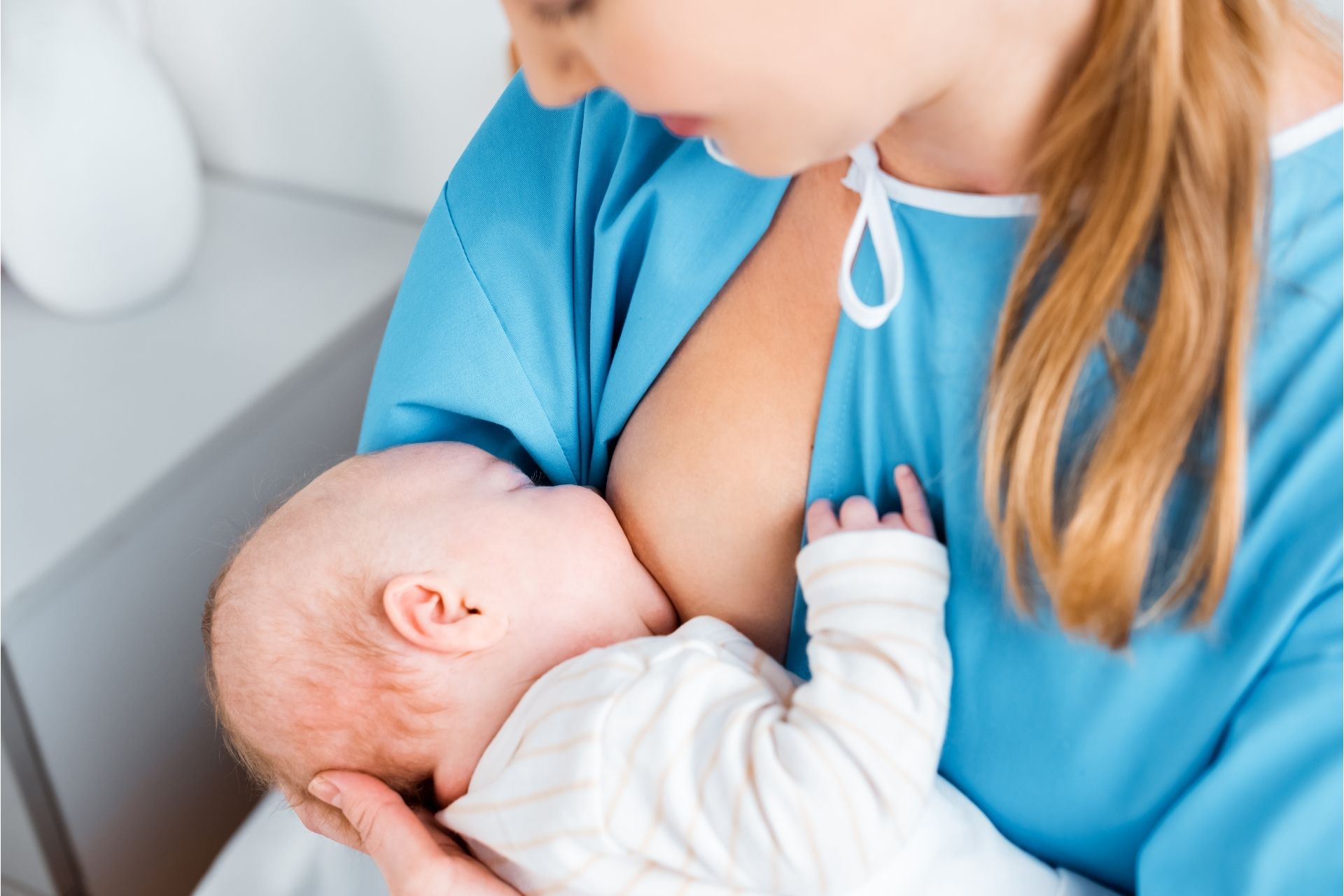
Breastfeeding bras, breastfeeding pillows, breast pads, breastfeeding clothes, and a host of other breastfeeding products are sometimes seen as a waste of money, so women do not use them.
It is one mistake women make. Breastfeeding bras and tops, for example, allows women to feed conveniently even when outdoor without exposing their full breasts.
Also, they’re designed to hold the breasts firmly while not being too tight or loose. A too loose bra will not fit and support the breast, and a too-tight bra will compress the breast, making you risk mastitis and clogged milk duct.
In times where you cannot pump or breastfeed, these bras are designed to accommodate such situations too. Breastfeeding pillows help you position the baby properly.
It makes a baby elevated to a higher level for easier breastfeeding. Embarrassing leaks are avoided, especially in public with breast pads. Breastfeeding essentials are often avoided, but it makes the whole breastfeeding journey easier.
I wrap up with this quote of Sarah Manguso “ My body, my life became the landscape of my son’s life, I am not merely a living thing in the world, I am a world. It inspires me on my breastfeeding journey and makes me want to do more.
As you breastfeed remember you are giving life to another human, it is a privilege not to take for granted.
Save this for later mama!