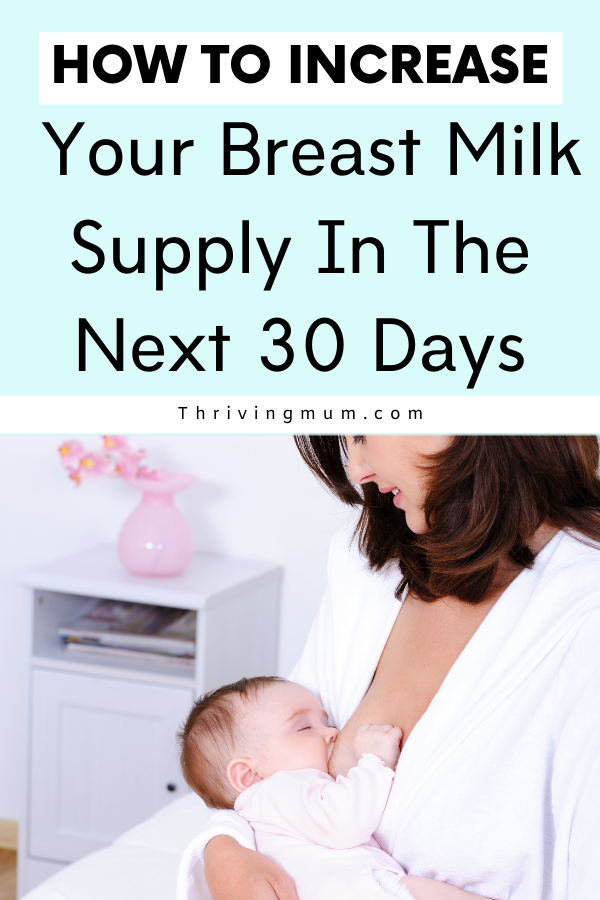

By default, a woman’s body is designed to give suck to human infants by breastfeeding. Breast milk is packed full of nutrients and antibodies essential for an infant to grow, develop and build immunity for the first six months of life, even after.
Some women, for some reason, may not be able to breastfeed their babies. Other women who especially have the desire to breastfeed are stuck at some point in their breastfeeding journey because they experience a low milk supply.
Of course, the next best option is choosing a bottle, which is switching to supplementary feeding. Why it isn’t bad in itself, the many benefits of breastfeeding, like mother and child bonding and reduced risk of infections, definitely outweigh the benefits of using a bottle.
While you don’t want to miss out on these benefits, you may be frustrated finding ways on how to increase breast milk production.
But not worry, in this article, I will be sharing tips, some of my experience, and tips on how to increase breast milk while breastfeeding as I, too, had a low milk supply when I started my breastfeeding journey. Let’s start with understanding how breast milk is produced.
Understanding Breast Milk Production

During pregnancy, the body prepares the breasts for feeding but not at their optimal state. After delivery, the hormone prolactin is in high amount increasing breast milk production.
In the first few weeks after giving birth, milk production is primarily determined by hormones. Still, if the child continues sucking for a few more weeks, the body establishes lactation, and milk production will be generally determined by how much milk is sucked.
There are receptor cells around the nipple and alveoli areas of the breasts that send signals to the brain, and when a child sucks, these receptor cells are stimulated, leading to the release of breast milk, and the more milk is sucked out, the more milk is produced.
This means breast milk production after an established lactation will largely depend on the extent of demand for milk by the child, determining how the body will produce or supply milk. So we can say it is a demand and supply process.
Therefore, moms who want to engage in breastfeeding are encouraged to keep the child on the breast as much as possible to be an established lactation and more milk produced while breastfeeding.
Things To Do To Maintain A Healthy Breast Milk Supply
To maintain a healthy breast milk supply, you need first to ensure that you are doing things right. There are two main things you should do right.
- Check if you are using an appropriate breastfeeding technique: there are so many breastfeeding techniques like cradle hold, V hold, C hold, etc. All may not work for you. Find the one you are comfortable with and stick to it to have a smooth breastfeeding journey with your child.
- Breastfeed as much as you can: this is one sure-fire way on how to increase breast milk.
How To Increase Breast Milk Production

1. Ensure That Your Baby Is Latching Correctly
In breastfeeding, latching is how a baby attaches to the breast during breastfeeding. The way a baby latches plays a vital role in how well the milk is produced and how well the baby feeds.
In the correct latching position, the baby’s mouth not just covers the nipple but also the areola so that when sucking, more milk is produced.
When a baby is latching properly, you most time hear the swallowing and smacking sounds, and the mouth is full, but if he isn’t latching properly, he struggles and even cries because he isn’t getting sufficient milk.
If the child latches to the breast correctly, using the sucking reflex, the sucking movement squeezes milk from the milk duct, which is where milk is stored, and the child gets sufficient milk, and it also stimulates more milk to be produced.
You can check out YouTube videos to see if your child is latching properly or not and practicing with your baby for correct latching. It will help you greatly increase your breast milk production while breastfeeding.
2. Feed From Both Breasts

Feeding on both breasts is vital if you are finding ways on how to increase breast milk while breastfeeding. Above, we talked about the supply and demand system which the breast uses to produce milk, right? Let us see how it plays here.
After the child has sucked for some time, say 15 to 20 minutes put the baby in the other breasts while the first one he sucked from is refilling.
If you keep switching this, you ensure constant production of milk and an increased milk supply while breastfeeding because both breasts are stimulated simultaneously hence boosting milk supply and higher milk production.
3. Breast Stimulation
Receptor cells around the nipple and alveoli are sensitive and when a baby sucks, it stimulates these cells, leading to the release of breast milk. After breastfeeding, you can use your hands to stimulate the breasts to prepare for another breastfeeding session.
It helps greatly to produce more milk. Just like when you are hand expressing milk, massage the breasts, the alveoli, and the nipple area to stimulate the cells around to increase breast milk production. So before another breastfeeding session (which shouldn’t take too long), the breast is filled with milk.
4. Eat Right

The quantity and quality of the breast milk produced are directly proportional to the type of food you eat.
It means, then, that breast milk produced = the type of food eaten.
As a breastfeeding mother, part of the food you eat is used to produce breast milk which nourishes the newborn.
So, it would be best if you ate right. Eating healthy, nutritious, and well-balanced meals should not be an option but a necessity. Skip the junks, sugary stuff, and eat well-balanced meals regularly.
It is definitely how to increase breast milk production. You will need to take energy-building foods, lots of fluids, vegetables, food rich in minerals, calcium, and all the body nutrients so that you do not lack nutrients while breastfeeding and ensure that sufficient milk is produced.
I have always noticed my breasts “feel full” when I eat a “big meal” (by big meal I mean eating a well-balanced diet, not scraps), and my baby takes a long time to suck because more milk is produced. But when I skip maybe breakfast or lunch, my breast is not always full, which is a sign of low milk production.
5. Do Exclusive Breastfeeding For The First Few Weeks After Delivery

The best form of nourishment for a child from six months to one year is breast milk. In an exclusive breastfeeding plan, you completely feed your child for six months without introducing water and any other solid or semisolid.
Now, I know it may be quite cumbersome for some women, especially if you are a working-class mom. However, you may try doing exclusive breastfeeding for one month or two months after delivery before introducing the formula if you cannot do the complete six months.
It helps greatly in how well the breast milk is produced and in your breastfeeding journey with you and the child. Breastfeeding is a skill that you learn, and unlike the contrary belief that many people think that breastfeeding should come naturally to mothers, it isn’t always the case.
You and your child both have to work together and learn to achieve a successful breastfeeding session, which is a well-fed baby. The more time you spend breastfeeding, the more time you learn, and the better you become at it.
In the early days of my breastfeeding journey, I didn’t know that I had to learn the skill as I thought it came naturally. At first, it was difficult and strenuous for me, so I opted for formula. With time, I got better at it. My baby no longer wanted formula as he preferred breast milk so, he hardly took formulas anymore.
When you can start with exclusive breastfeeding, the breast produces more because, over time, the baby has demanded more. So even if you introduce formula, you can interchange by breastfeeding and using a bottle to retain milk production.
6. Breastfeed All Night And Day If Possible

This is one of my best tips for breastfeeding. Many women finding how to increase breast milk production can try this out. Make a few days or nights you are free and aim to breastfeed throughout.
If you cannot do it during the day, breastfeeding all night is a great option (it works so well for me). While ensuring that you have had proper rest and have eaten well, put the baby on the breast for the whole of the night, only giving breaks when the baby is satisfied.
It works best when you use the lying-down position of breastfeeding. The baby does nothing much other than suck, suck, suck for the whole time, and this works if you want to increase breast milk production.
7. Pumping

Either you use the hand expression technique to pump yourself, or you use a breast pump. Pumping is a great way on how to increase breast milk production while breastfeeding.
When you pump, you increase more milk because emptying the breast gives room for filling up, which means milk more milk production. While breastfeeding on one breast, you can pump out more milk from the other or pump the breast after breastfeeding.
The frequency of pumping helps milk supply and increases breast milk flow. Try to start pumping early. Some women prefer using the machine pump as it seems faster for them.
I prefer using my hands to express or pump than using a mechanical pump because it seemed easier for me. Anyway, I didn’t have to use a pump much because my baby sucked well, and I was a stay-at-home mom when he was an infant, so I didn’t need to keep a store of breast milk.
8. Avoid Anything That May Reduce Milk Supply

If you intend to breastfeed your child, it is important to find out what you will have to avoid that can affect the breast milk and milk production content.
Some birth control pills are hormonal. They could contain the hormone estrogen that inhibits breast milk production. So it would be wise to avoid that for the first few weeks after delivery.
See your doctor know what to do if you intend to do birth control after giving birth. Also, avoid taking caffeine, alcohol, or even smoking. Small amounts of these can pass through to the breast milk and can affect the baby.
If you have to take medications, ensure that the doctor approves it as not all drugs are appropriate for pregnant and lactating mothers. Some of them can inhibit milk production.
9. Have A Positive Mindset Towards Breastfeeding

In the first few weeks of breastfeeding, breast milk production will be based mainly on hormones. The state of your mind will affect the quantity of milk production then.
If you have heard stories of the difficulty in breastfeeding and how tiring and demanding it could be, you may be scared and choose the easier option of supplementary feeding. But if you can believe and be determined that you would have a successful breastfeeding journey, I bet you would.
While I didn’t do a completely exclusive breastfeeding feeding because my milk flow was low at first, and I didn’t latch well, My sister who also experienced low milk flow after birth, but she didn’t opt for a bottle.
She kept giving the breast to her baby even when little or no milk came out. She had a firm belief that she was going to do exclusive breastfeeding. In no time, she had an increased breast milk flow.
If you have a negative mindset towards breastfeeding, it alters your mood and can impact the breast milk flow.
10. Try Out Lactogenic Foods
Lactogenic foods are foods that help to improve breast milk flow. Though scientifically, there is no real evidence on how they boost milk production, there are records of women testifying that they have observed increased milk flow when they take them.
Tiger nuts, cereals, and a lot of fluids helped me a lot while I was breastfeeding. I didn’t know how but it prompted breast milk flow. You can try out lactogenic foods like fennel and fenugreek seeds, oats, etc. They work wonders.
Breastfeeding can be fun. Though not without some hitches, but if you work with these tips on how to increase breast milk, I bet you will be sharing your own success story soon.
Save this for later!