If A pregnant woman has some birth complications, it may not be wise for her to deliver vaginally but instead through an operation called a scheduled C-section.
What Is C-section?
A C-section is a surgical procedure, done to deliver a baby in a situation where vagina delivery isn’t possible or is too risky for the woman and a child.
What Causes C-section Birth?
There are a couple of reasons why a woman may have to undergo a C-section instead of vagina delivery.
- The position of the baby.
- Prolonged Labour.
- To reduce defects in birth and complications.
- Fetal distress.
- Multiple births.
- Placenta issues.
- Umbilical cord relapse.
- Health conditions like HIV, diabetes, or genital herpes.
What Is A Planned C-section?
This is when the cesarean section has been planned, that is preparations have been made and the date for the cesarean section fixed.
It is unlike an emergency cesarean section where the doctor makes a quick decision for an operation because the baby and mother may be at risk during a vagina birth; or an elective C-section when the woman decides to have a cesarean section without any necessary health risk.
What You Can Do On The Night Before A C-section?
On the eve before your scheduled C-section date, there are some things you can do to prepare ahead for the next day,
- Do not take food 8 hours before section if you have to eat take only fluids.
- Use antiseptic or antibacterial soaps to wash your body.
- Shave your pubic area (it should be done with clippers to avoid bumps)
- Do not swallow gums or sweets.
- Take only clear fluids if you have to take something 2 hours before the operation; milk, lemon, Creamer, should be avoided.
What Is The Best Week For C-sections?

The best weeks for C-section delivery are usually the 37th to the 38th week.
According to Laura Hart MD of the division of maternal-fetal medicine University of Texas Health Science center Houston she says “waiting until 39th week increases fetal and maternal risks”.
Waiting too long, the woman may go into labor, there may be the risk of rupture of the membrane, and hypertension and an emergency C-section will have to be scheduled.
What are some things to expect in a scheduled C-section? Below are 10 things that you should expect in a scheduled C-section delivery.
1. A Visit With The Doctor

There are so many reasons for women having a planned cesarean section, like placenta Previa (which is a low-lying placenta), multiple births like twins or triplets, and when those babies are sharing the same placenta, infection and diseases like genital herpes or HIV.
When you have confirmed that you are pregnant, check my post on early pregnancy signs to know the signs to watch out for, the next thing you will want to do is to visit with your doctor most preferably an obstetrician.
Some series of tests, scans, and examinations will be done and then it may be determined that you need a cesarean section. The will doctor explain the reasons for this, and the pros and cons and you both will work on planning a date.
Most times the date will be from the 37th to 39th week of pregnancy when the baby can breathe on its own. The final decision for carrying through with a C-section will be you.
After all, you are the one who is going to be operated but the doctors will definitely tell you the health implications involved. When it is close to your set date, during your routine antenatal check-ups, your OBGYN will remind you of your set date for the scheduled section.
Of course, you should have pre-registered at the hospital. Important details like your insurance, partner’s details, health history, test results, etc. will be required for documentation.
While you visit with your doctor, you will also need to take a hospital tour. Check out the hospital floors if possible the theatre, and get to see the environment you will be birthing your baby.
Look for the different wards and if possible the theatre where the operation would take place.
As you carry out your birth tour, ask any questions relating to the hospital’s policy concerning visitors, meals, payments. My post on 20 questions to ask on your hospital tour, is a useful guide.
2. Before Going To The Hospital

Once your scheduled date is in mind you need to make your birth plan. Since it is a scheduled C-section, you will have time ahead to think through what you would want your birth plan to be like.
Things like the number of people to be inside the theatre, desire for exclusive breastfeeding and if you do not want any formula to be given to your baby, making videos or photographs of the birth process, if you would want a gentle C-section so that you can see what when the baby is brought out, mirrors at your bedside, etc.
Take time to think through and prepare a birth plan that would give you the kind of birth experience you envisage. Prepare your mind that there would be some changes and adjustments here and there but you medics would explain and give you reasons if any.
Also prepare mentally for the process. Though the number of women engaging in a C-section is increasing and the success rate high, you may still be overwhelmed with feelings of fear, anxiety, and uncertainty.
Will there be complications? Would I heal properly? Would I come out of the process alive to see my baby? A lot of these thoughts would run through your mind and it is okay to be a bit scared but have more faith than fear.
If you have got the best doctors who are committed to doing their jobs you would have nothing to be scared of, so put off fear. Rather than fear, imagine the joy of finally holding your baby after nine months.
Prepare your home too. After the operation, you will put off strenuous activities for a while especially bending so that you won’t put a strain on the abdomen because of the stitches.
You will be needing a lot of assistance after birth, so prepare ahead. Stock up on essentials like food items, cleaning and washing materials, and miscellaneous.
Clean the home, make plans for extra aids after birth if need be, prepare the older kids, prepare your hospital bag. You and your partner will have to work hand in hand to prepare your home.
When it is finally the due date, your emotions will be heightened it is normal but as I said choose to dwell more on the positive. On the night before the scheduled C-section wash with an antiseptic soap.
Avoid skin lotions and creams. Shave your pubic hair with a clipper if you haven’t already done so (it is a standard procedure during C-section so you may not bother), limit the food you eat to only light and easily digested meals.
Avoid solids. On the day of the C-section, go about 2 hours earlier than the scheduled time. You should not eat anything on that day but whoever will be going with you may pack a breakfast.
3. Preparing Before The Operation In The Hospital

Information’s about your insurance, birth plan, health history, allergens, medical history would be required.
Once everything is set, then you would be admitted into the hospital.
You would meet with your OBGYN who will come to answer any questions you have then you will be moved to the theatre.
You may be examined again and draped in an appropriate theatre cloth called the theatre garb. The health team will already be assembled.
Your partner or any chosen person in your birth plan may be allowed into the theatre room and also dressed in an appropriate theatre cloth to maintain the sterile environment of the theatre.
He may be at your side holding your hands and encouraging you throughout the whole process. For the sake of safety and to reduce the risks of infections, of you and your baby you will only be allowed a limited number of people in the theatre.
The members of the health team may give you a pep talk encouraging you that is going to be a short procedure about 30 minutes to one hour and something you shouldn’t be scared of.
They would also tell you that in no time you would be holding your baby and they would do their best to ensure that you have a smooth operation.
4. Preparing The Body
The abdomen where the operation will be carried out will have to be prepped. Your clothes and any jewelry will be removed while you are in the theatre garb; you will wear this before they start preparing the body.
The baby bump will be cleaned with an antiseptic or antimicrobial agent to kill any germs in the skin. Any hair in the stomach and the pubic will have to be shaved off with a clipper.
Then cleaned with an antiseptic. A catheter which is a tiny tube is fixed in the bladder to collect any urine flow during the period of the procedure as you will not be standing up throughout the operation.
5. Administering Of The Anesthesia

Many hospitals ensure that their patients stay awake during the whole procedure, so you will be numbed from below so they would administer a local anesthetic, so you can be alert.
An intravenous (IV) line is first set up through your vein. The purpose of the IV drip is to keep you hydrated and any drug that will be given to you will be through the IV line.
The anesthesia may be administered as an epidural or spinal block so that you would be able to move the upper part of the body (a local anesthetic).
It is better than general anesthesia that will knock you completely cold, and you get to see your baby immediately after delivery.
There will be a screen or a drape for covering you from seeing when you get cut but if you want a gentle C-section, the drape would be transparent so that you get a glimpse of what is happening especially when the baby is brought out. You may also place mirrors at your side so that you can watch what is happening.
6. The incision

A small incision will be made at the lower abdomen just above the pubic hairline and another at the lower part of the uterus. There are usually two types of incisions: low transverse incision and vertical incision.
In a low transverse incision, the cut is across the lower part of the uterus. It is the commonest incision used in a C-section delivery because the lower part of the uterus has thinner muscles so blood loss will be minimal and in case of any vagina delivery in the future, there would be lesser chances of tear.
The vertical cut is done when the baby is positioning in is unusual like when the baby is lying low in the uterus. This incision is done in the middle of the uterus.
7. The Delivery

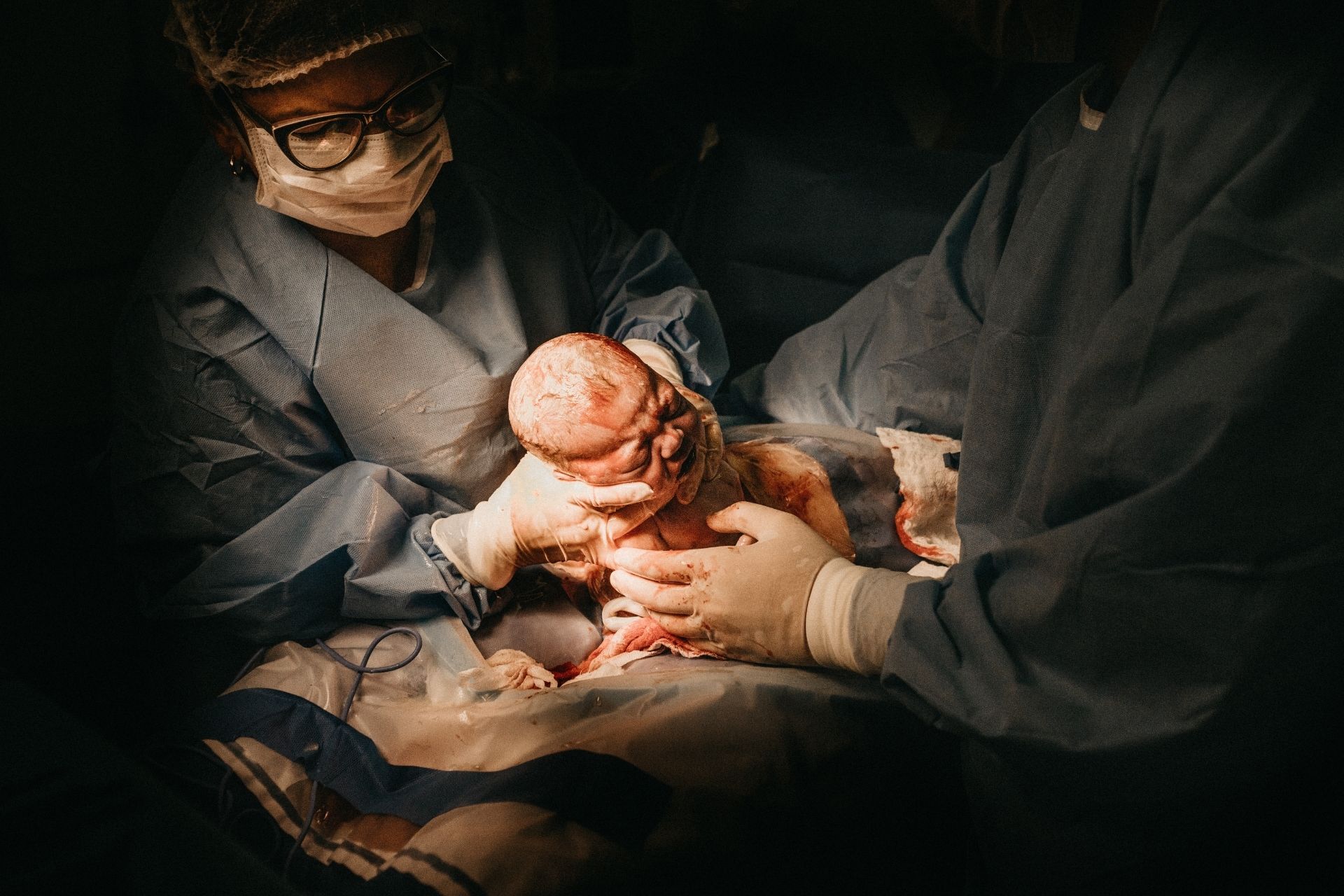
Once the incision is done the obstetricians would use a suction tube to pump out amniotic fluid from the amniotic Sac, then the baby will be brought out to the world.
There may be a need to use suction on the baby’s nostrils to pump out any more mucus or the amniotic fluid to clear the lungs so that the baby can take its first breath.
While all these are done you may feel slight pressure and tugging as the baby is brought out but you won’t feel any pain. After the baby is brought out, The placenta will be removed, then the baby’s umbilical cord will be cut and clamped.
8. Stitching Up

The obstetricians will quickly inspect the reproductive organs to ensure that there are no injuries while the operation was done then they would stitch up the incision in the uterus and abdomen with an absorbable stitch that does not need to be removed.
Via the IV tube, oxytocin may be given to reduce bleeding. Oxytocin causes contraction of the uterus to control bleeding. You will also be given antibiotics to reduce the chances of infection.
9. Meeting Your Baby
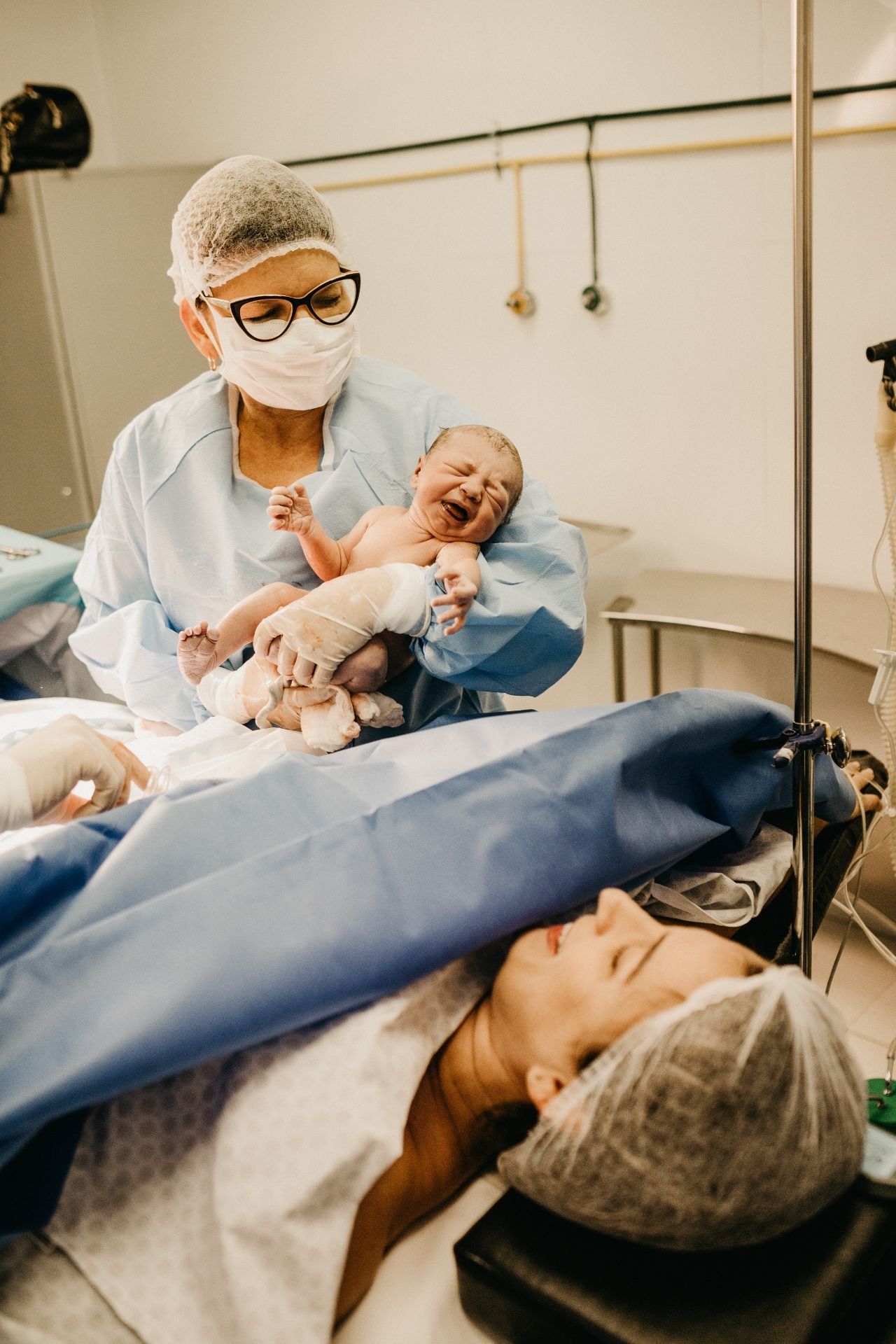
Your partner may have already been given the baby to establish skin-to-skin contact.
After you have been stitched up you will finally have the chance to see the one you have nurtured in your womb nine months long.
You may be assisted to hold your baby for the first time though it won’t be for long because you will be tired after the operation. Your baby will be cleaned, dressed, and taken to the nursery.
You would clean up and be taken to the recovery room for recovery. As with all deliveries you’ll be expected to rest well to regain yourself.
10. Recovery

For recovery, you are encouraged to move around as soon as possible but you will be assisted by the nurses and family members in case you are lightheaded.
Only light fluids will be allowed for the first few days. You may not have a thorough bath only cleaning up. The incision site would need to be cleaned regularly till it heals.
The nurses would assist you with that and also give you tips on how to clean the site, how to take care of yourself and your baby why you have been discharged home.
You may not be able to hold your baby for breastfeeding. If you want your milk given to your baby instead of formula, you can pump some milk before the operation and store it in the freezer.
Inform the nurses about this even before the operation so they can help you with this. At intervals, the nurses would bring your baby so you both can bond.
The scheduled C-section process is pretty much quick and straightforward. Want to know how the other type of delivery (vaginal delivery) is? Check my post on the 4 stages of labor.
Save this for later mama!
