

When do babies stand, when do babies sit up, when do babies pull up to stand, when can babies stand up from the floor? These are questions that run through the mind of new parents a lot.
In this post, we shall discuss everything you need to know about helping your baby to stand and other necessary tips that will guide you to assist your baby when he or she reaches this milestone.
Let’s start by answering these frequently asked questions by new parents before giving tips that will guide you to help your baby stand.
When Can Babies Stand Up From The Floor?
Most new parents usually ask when babies stand right from the floor. Usually, around 7-12 months baby will stand up from the floor. They can use objects their height for support to pull up.
When Do Babies Pull To Stand?
When do babies start pulling things to stand? Your kid will begin pulling up on everything they can grasp between 9 and 12 months, including your legs and the couch.
Once babies have mastered sitting and crawling, many will start reaching for objects and pulling themselves up to stand (though some babies skip crawling completely).
It’s significant to remember that not every infant develops at the same pace. While some children might take a bit longer to accomplish these developmental milestones, others might stand or pull themselves up sooner.
Most infants will eventually reach these milestones with time. Most people who learn the abilities later will be able to use them by a few weeks to a few months after the average range.
When Can Babies Stand Without Holding On?

You may ask, when do babies stand, when do babies stand by themselves, or when do babies stand without support? Babies can often stand unaided for between 10 months and a year.
Initially, it will only last for a short while, but as the baby gets more practice moving around, letting go of supports, and even trying to take tiny steps while holding your hands, it will last longer and longer.
They’ll be able to stand up straight and utilize their hands by the time they’re 11 to 14 months old. From then, they will begin learning to perform more complex tasks, such as bending and carefully sitting down from a standing posture.
How Long After Standing Without Support Do Babies Walk?
You may want to know how long it will take for babies to start walking after standing. Most infants begin to walk within two to three months of learning to stand.
Although some people may begin earlier or later, that is around 12 months. It doesn’t matter how much time; what matters is the sheer volume of effort and practice.
When Do Babies Stand Flat Footed?
If you’re curious about when babies stand on the floor flat-footed, this is the simple answer.
Most infants begin to put their feet down flat, stiffen their legs, and bear some weight when placed vertically with their feet on a firm surface around the age of 6-7 months. Some babies enjoy doing this and would rather stand than sit on a caregiver’s lap.
Do Walkers Help Babies Walk?
When shopping for your crawling infant, you may want to know if walkers help babies walk. Baby walkers and jumps do not assist a baby in learning to walk.
In actuality, walkers and jumpers can prevent or postpone your child’s achievement of these significant milestones.
In addition, babies endure more delay the longer they are on a walker or jumper. Baby walkers may be dangerous since they can give infants more height, speed, and access to many risks.
Additionally, infants tend to tip over, tumble, and slide off stairs. Many injuries occur when the infant is in the walker when it tips over, gets flung out, and hits objects or falls on steps.
How Can I Strengthen My Baby’s Legs To Stand?
You may ask what ways to strengthen a baby’s legs to stand. Your baby needs strong legs, hips, and abdominal muscles before it can even stand, let alone walk. Rolling, sitting, and crawling will build this strength, so encourage them as frequently as possible.
1. Begin Early
Most infants will begin to hold themselves on their legs when held upright between four and five months; this is when the baby stands.
This early stage standing activity helps your baby become accustomed to standing up straight and can begin to develop their leg and hip muscles.
Provide the proper assistance. Please put all your support into their trunk rather than reaching out with your hands. It will prevent them from tilting their feet, which will help them develop stronger muscles and bones.
2. Promote Squatting

Squatting is an incredibly crucial skill that will help your baby stand up independently. When a sofa supports them, place toys at their feet and encourage them to squat down to pick them up.
The hips and thighs will develop superb muscles from the up-and-down motion. Keep toys on stools and tables that are within reach.
3. Dispatch Mobile Objects
When the baby stands, move any light, unstable chairs away from your infant and replace them with heavy, stationary items they can pull themselves up on.
They might become frightened and give up on trying again if they raise themselves only to have a chair pulled down on top of them.
4. Make Everything Baby-Proof

The same safety principle applies to any corners or ledges that your baby might run into. Protect the baby’s head by cushioning any vulnerable regions.
Pick up any dropped papers or slick magazines to avoid tripping and falls. Choose non-slip or skid-proof socks if your baby wears socks to keep their feet warm.
5. Create A Beat
Play some music and let the baby dance; babies love to time their movements to the music. Dancing is fun when music plays and strengthens the leg and core muscles.
Utilize their enthusiasm by dancing whenever you can.
6. Promote Exploration
If your baby spends exploring time their surroundings, the more chance they have to discover height at their own pace and doing. Therefore, floor time is essential for development.
7. Allow Them To Play With Other Kids
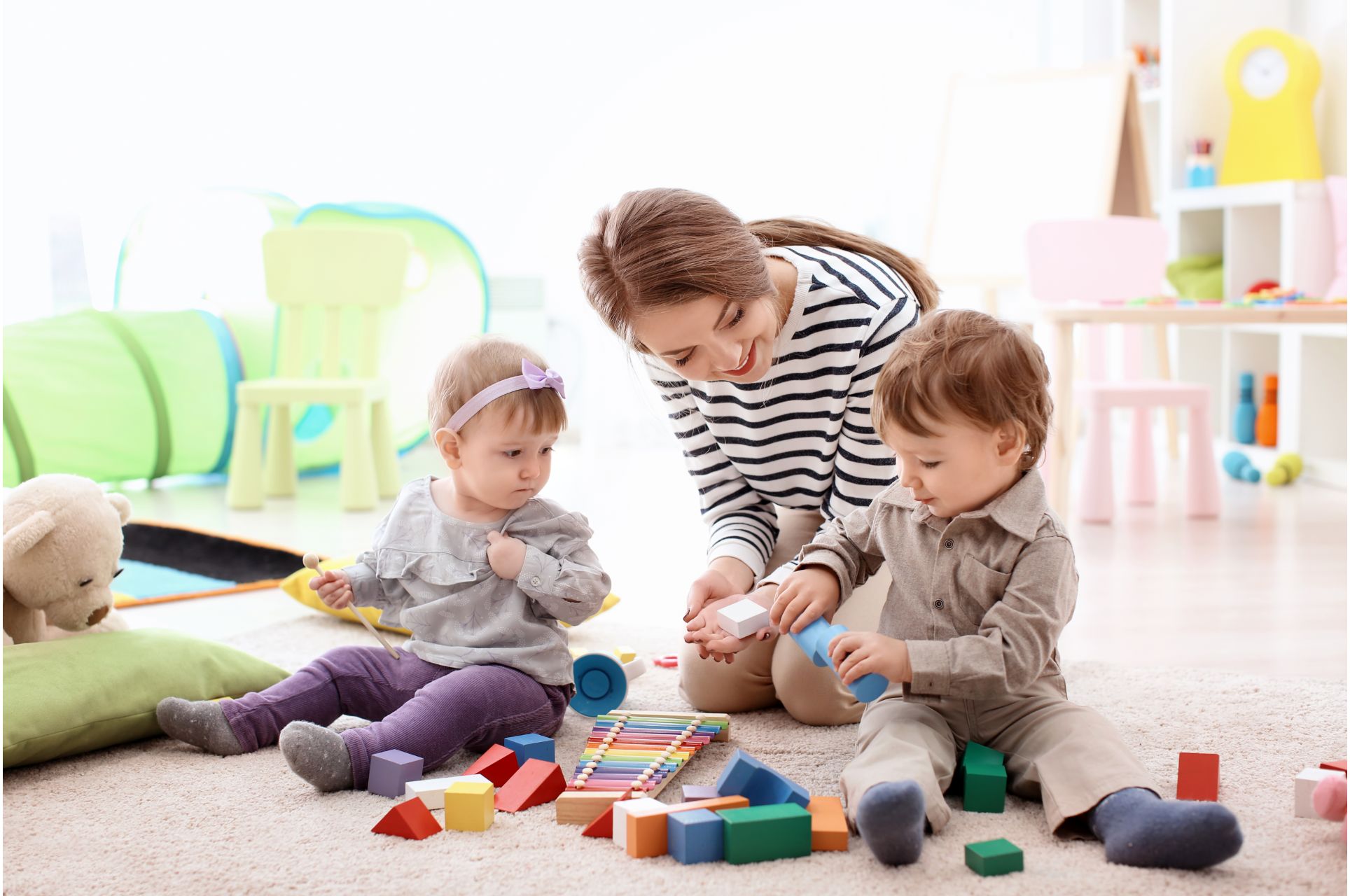
Babies are susceptible to influence and learn best by observing other people. Set up numerous playdates with other infants and toddlers, and they’ll soon start straining to keep up.
Your baby might begin pulling himself to stand if they observe other babies doing so. Encouragement is the best motivator, whether you’re a baby or an adult, so cheer them on.
Use this strategy to promote more standing because everyone enjoys receiving applause and clapping. Encourage them aggressively, so they truly understand how fantastic standing is.
How Do I Teach My Baby To Stand Without Support?

If your baby only stands with support, you may want to know ways how to teach your baby to stand alone. Try these steps:
Step 1: Prepare The Space
Before anything else, you must prepare your child for success by:
- Removing anything from the floors that could cause tripping hazards.
- Place delicate ornamental things elsewhere.
- Cover electrical outlets, and gather extra cords.
- Encourage mobility in your child even if they aren’t yet walking so they can explore everything in their path. Babyproofing will keep them safe from harm and boost your confidence.
Step 2: Build A Solid Foundation First

To support standing and walking, your infant needs to have strong core muscles. To practice moving up, down, and all around, ask them to reach for toys lying on the ground.
Your infant usually uses upper body strength when pushing and pulling up. Focusing on the legs and gaining lower body strength while sitting on a stool.
It also emphasizes supporting the body by putting the feet underneath.
Step 3. Remove Shoes
For early walking, shoes are not necessary, and letting your youngster initially explore their environment barefoot can be preferable.
When learning to walk, babies pick up a lot of information from their feet. Their brain modifies how their muscles and joints behave in response to the texture of various surfaces, such as hardwood, carpet, and grass.
Of course, you’ll want to ensure there are no objects that could hurt your baby’s feet before letting them explore the world without shoes.
The signals your baby’s brain receives about the surfaces they will be walking on may be muted by shoes. In addition, walking barefoot aids in strengthening the foot muscles, which in turn increases stability.
Step 4: Offer Help

You should support your child’s trunk, not their hands, if you want to take them on a brief walking adventure around the living room.
Your infant will walk more naturally and without leaning forward into their toes when you support their trunk.
To establish a solid motion pattern in their lower body, babies must distribute their weight evenly across the whole surface of their foot, including the heel.
Step 5: Provide Encouragement
Your baby could require further encouragement to start moving. Try reclining on the ground next to them. Hold out one of their preferred stuffed animals or toys a few steps before them.
As your baby gains movement, you can think about leaving a trail of toys throughout the room to see whether they’ll move from one toy to the next. To keep things fresh, rotate the toys sometimes.
Step 6: Move Everywhere

Walking focuses a lot on moving ahead. Moving up and down, though, has its benefits as well. The legs are required to support and balance the body when your infant reaches for objects.
By blowing bubbles over your child’s head, you can encourage them to reach. You may also try shifting the toys in your baby’s playroom to various surfaces at various heights.
A low, open shelving unit is an excellent option for giving your youngster a complete view and easy access to toys.
Step 7: Go On A Ride
The next stage for your infant may be moving on furniture like sofas and coffee tables. Your child is moving their weight from one piece of furniture to the next by doing this.
The duration and amount of practice they get while moving may lengthen with time, improving their overall stamina.
Step 8: Make Them Push Things
Pushing toys such as small shopping carts, infant strollers, and other toys is another option for aided walking. Make sure the push toy you choose is strong and offers adequate resistance to the sort of flooring you have.
Keep in mind that your baby powers the push toys. Some go more quickly than others. Consider purchasing one that allows you to weigh it for slower motion if you’re worried about that.
The dynamic support your baby needs as they progress through the phases of walking can still be provided by push toys while allowing them to achieve some independence.
They also offer entertaining exercises to promote other types of movement, such as squatting and reaching.
Step 9: Take Control

By giving your little cruiser a few toys, you might be able to get them to start walking by themselves. Consider compact, lightweight objects like egg shakers or small beanbags.
Start by giving them one toy and then add another if they’re moving forward without any problems.
Another option is a larger (but still lightweight) stuffed animal that requires two hands to carry so that your infant utilizes both hands, which is the key to whatever strategy you employ.
A baby’s hands divert attention away from supported motion, like cruising. When your baby is gripping something, they are more likely to work on balance in their lower body and trunk rather than reaching out for assistance.
Step10: Ascend The Stairs
Take your show to the stairway if the floor starts to grow monotonous. You can use a ramp if your home doesn’t have steps.
Additionally, it permits what is known as “lower body detachment.” As a result, your baby might begin to distinguish between upper- and lower-body movements.
If you follow these steps when babies stand, your baby will start walking soon.
Ways To Assist Babies To Walk After Standing
There are many ways to promote walking, but the most effective one is to give your baby as many opportunities as possible to explore her body and try it out for herself.
Let your child spend a lot of time outside the stroller, carrier, or swing to be active and explore. It will inspire the child to walk as a result. Here are some specific methods to encourage such initial actions.
a. Create an attractive trail. The same techniques that encourage a baby to crawl or pull themselves up might inspire a novice walker.
When the child pulls up to stand, keep tempting items out of reach because your baby might try new access methods to get the prize.
b. Baby Proof. Make sure things your baby might use to maneuver themselves are childproofed, with no sharp corners or risks of tipping, if you haven’t already done so.
If your toddler can stand but seems afraid or unsure of what to do next, help her by positioning sturdy furniture to steady herself as she goes.
c. Hold her hand. You may also promote independent stepping by accompanying her while supporting her with your hands.
d. Purchase her a push-toy. Your youngster can gain control by gripping and propelling a little lawnmower or shopping cart in front of her.
Additionally, it will provide them with the necessary support while strengthening her legs, improving her balance, and building her self-confidence.
Look for solid toys with a handle or bar she can lean on and large wheels that make it more difficult for the toy to topple over.
e. Avoid using a baby walker. Infant walkers should not be sold or manufactured in the United States, according to the American Academy of Pediatrics (AAP).
Studies have shown that they can impede motor development, prevent the development of a baby’s proper spinal curve, and impair their posture.
Even worse, walkers can roll or flip over, injuring people as they do so.
f. Allow your baby’s toes to remain free. Leave the shoes out for the time being.
Instead, allow your baby to walk barefoot as much as possible indoors and on safe surfaces outdoors to help develop the muscles in her feet and ankles, help her arches grow, and learn balance and coordination.
g. But provide comfortable shoes outside. Keep your shoes flexible and light for outdoor adventures. Avoid wearing bulky high-top sneakers or tall booties since they restrict your walker’s movement and make her go more slowly.
Mistakes To Avoid When Teaching Your Baby To Walk
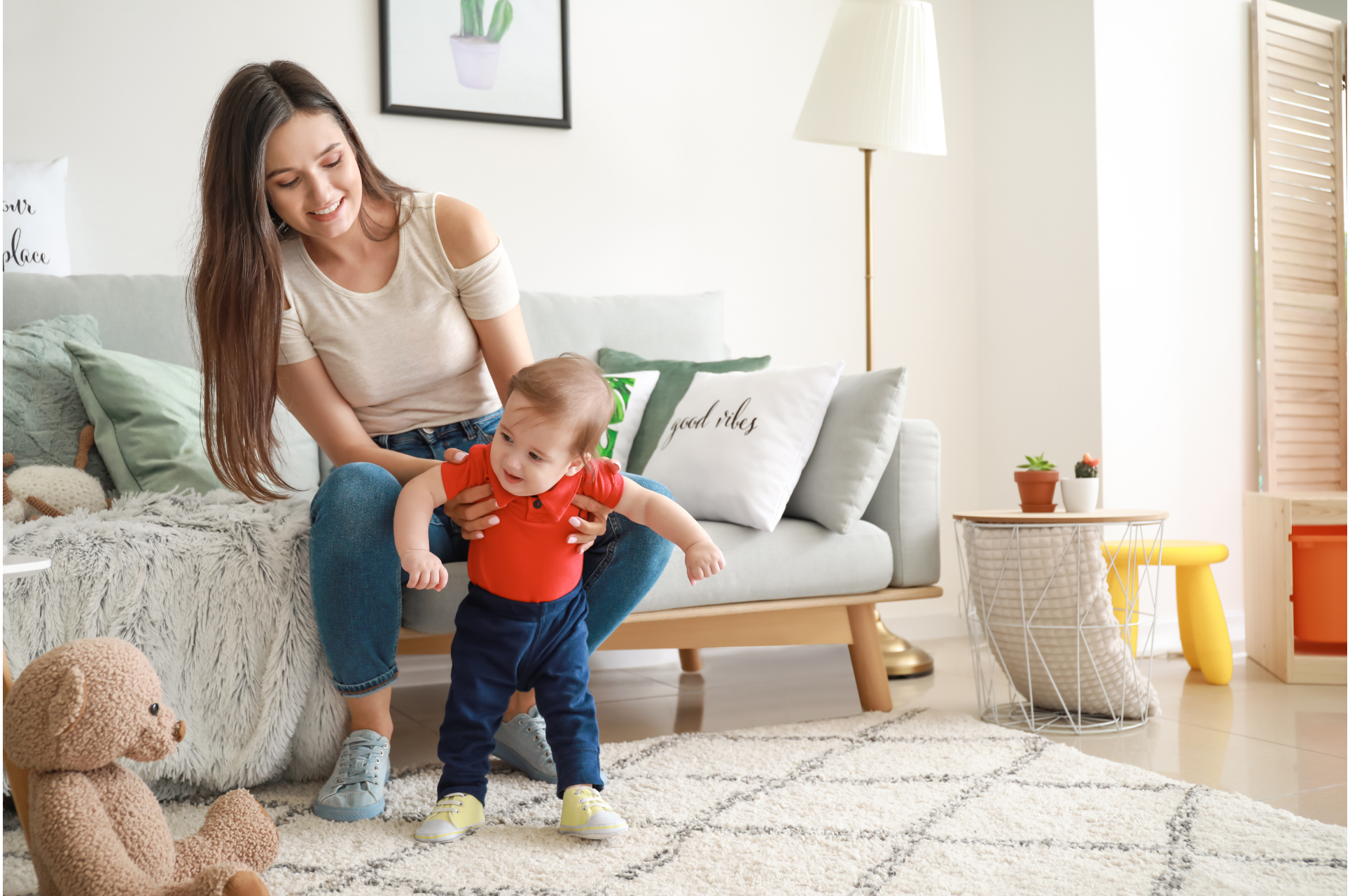
Avoid these mistakes when teaching your baby to walk.
1. Don’t Push It
To “assist” your child walk, refrain from taking the child by the hand. It’s preferable to help her walk independently. It will help the child become independent.
Never make your kids walk when they don’t want to or are not ready. Your youngster must be able to move how he or she prefers.
Naturally, you’ll want to be close to your baby while performing this exercise. They should be allowed to cautiously up the stairs on their hands, knees, and feet.
Every muscle in the body is used for the exercise. You can use a ramp if your home doesn’t have steps. It permits what is known as “lower body detachment.”
As a result, your baby might begin to distinguish between upper- and lower-body movements.
2. Avoid Being Paralyzed By Fear
It’s crucial to let your child explore his new skill. We should walk with our kids without putting any pressure on them. Never allow your youngster to experience undue anxiety or expectations.
3. Do Not Use A Walker

When a baby stand, you may be tempted to use a walker to help to assist your baby in walking, but walkers can prevent the time when he feels confident walking alone.
Additionally, using a walker might cause structural changes in your child’s feet and legs. Walker use is another well-known major contributing factor in home accidents.
Putting on walking boots Baby feet do not need to be supported by rigid shoes. Conversely, newborns should generally refrain from donning shoes.
According to experts, toddlers’ feet are still developing as they learn to walk. Therefore, putting shoes on our baby’s feet could do more harm than good.
It is still advisable to take off your child’s shoes while they are walking, even if you prefer that they wear shoes. Instead, your child should put on flexible-soled shoes.
Remember that their sole purpose should be to prevent your child from slipping and shield them from potential harm. Your youngster may walk more unsteadily if they wear shoes that prevent the foot’s arch from forming.
4. Over-stimulation

Parents frequently use toys to encourage their infants to walk. You must avoid getting in the way of your baby’s capacity when the baby stands, so the child focuses on the work at hand.
Your youngster should only be allowed to play with the toy you chose for him, and it should not be too much.
5. Do Not Go Ahead Of Your Child When Running
Many parents use the “chase the parent” game to encourage their kids to walk. The child must continue walking as the parent recedes from them as the child walks forward.
Although this isn’t necessarily bad, you shouldn’t leave if your youngster is just about to touch you.
6. Walking With Our Arms Raised
Ideally, you should place your hands at or just below your infant’s hips to support her while she walks. Experts advise doing this to let your youngster walk normally.
It’s advisable not to educate your youngster to walk with their arms raised in the air because no one ever does.
Conclusion
It can be a bit confusing and overwhelming as you and your baby will try to adjust to a new phase. But do not worry too much.
These are tried and tested tips that are sure to guide you to help your child achieve this milestone.
If your baby starts standing earlier, it’s quite okay too. If you have concerns when they make no move to stand at the stated months, kindly see a doctor.
More than these tips, the key to achieving results is consistency. So, keep practicing till your little one perfects the art.
Don’t forget to save this for later!
