
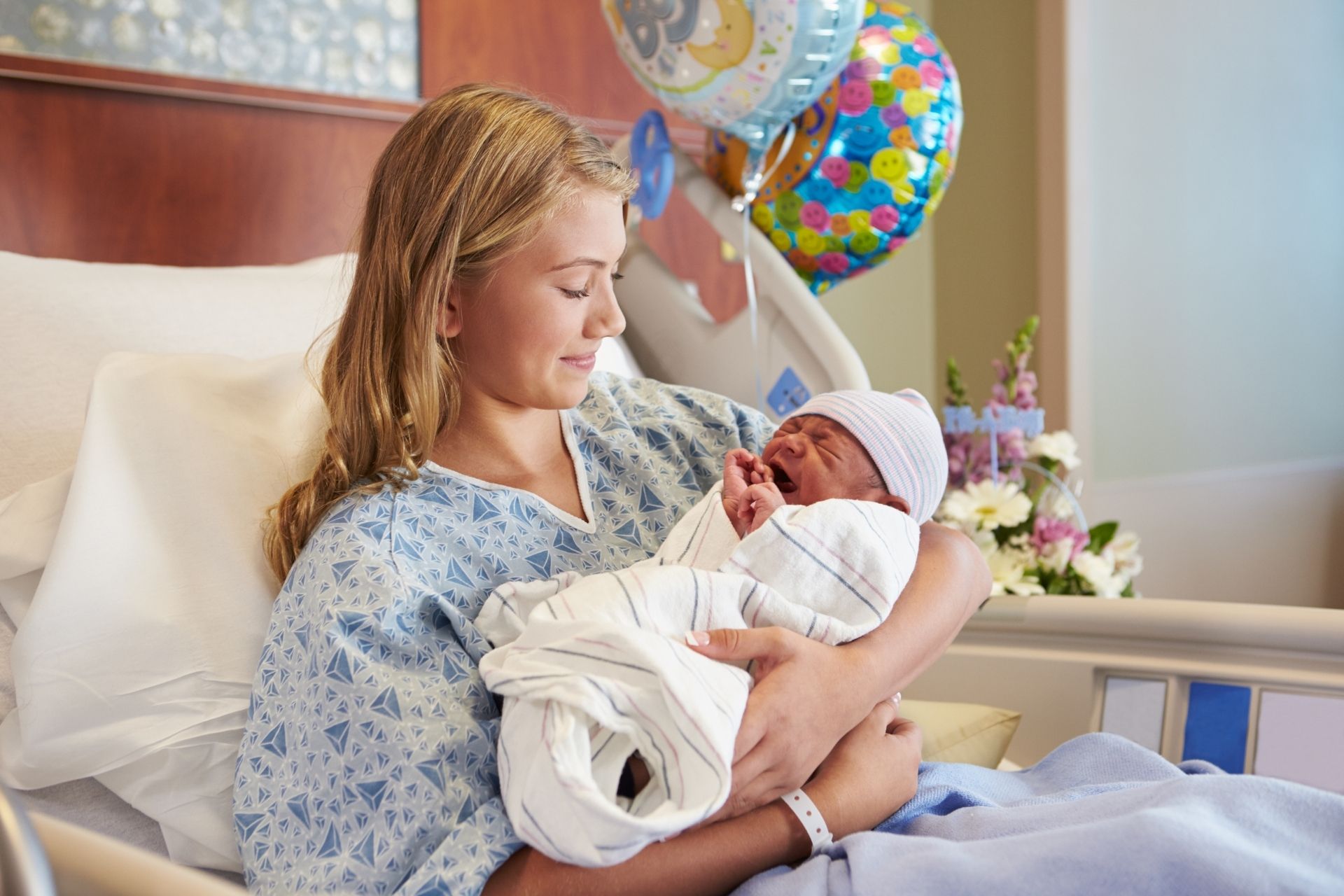
If you are a first-time mom, and your due date is near, I know your emotions are heightened, you are anticipating how the whole labor process will go and essentially what will happen after birth when you finally get to see your little one.
9 months back you received the news that you were going to be a mama. Oh!!! How wonderful that felt, the 9 months journey seemed so long but finally, it’s almost here, and you wonder how the first 24 hours after birth would be like?
How would life as a mom be? Will you get to hold your baby immediately after birth or will the baby will be bathed before you do that? Well, anticipate no further.
The 10 Essential Guide For What Happens 24 Hours After Birth was written just for you. Here is a guidepost, that gives hints on how the first day after birth is like. But before we divulge into that, let’s answer some frequently asked questions on what happens the first 24 hours after birth.
Who Cleans The Baby After Birth?
A maternity nurse or a neonatal nurse will be responsible for cleaning the baby after birth. A neonatal nurse works especially with infants. Both of these nurses work with the mother assisting her with the proper care of the infant.
Note that the baby should not be bathed immediately after birth the Vernix caseosa (the whitish substance on the baby’s skin after birth) should be rubbed into the skin.
The maternity nurse is not specialized for the only infant, she also takes care of the mother.
What Happens After You Give Birth In The Hospital?

Immediately after a normal vagina delivery in the hospital,
your baby will be placed on your chest or stomach. Sometimes the baby will be wrapped in a blanket. Early contact is very vital.
The medics may wait for few seconds before cutting the umbilical cord and clamping it (your partner may do this if requested on the birth plan). Right in your arms, the baby will be cleaned, the vitals checked, an Apgar test conducted, and other preventive drugs administered.
The nurses will also put a tag on the baby, dress the baby for warmth. You will also be encouraged to put the baby on the breasts. It is standard practice for doctors to evaluate the baby to observe the general condition. Then you will be assisted to deliver the placenta if you haven’t already done that.
If you had a large tear, you will be stitched up in a process called an episiotomy. Then you will be cleaned up and may head off to the shower If you feel up to it.
Of course, you will be light-headed after the labor. Your recovery will be paramount this time. You will be given a light meal and encouraged to drink lots of fluids.
If you had a C-section, you may not have immediate skin-to-skin contact, but as soon you are out of anesthesia and the incision site stitched, you can be allowed to hold your baby.
What Happens The First Day After Birth?

A lot of things happens on the first day after birth. Let’s see some of:
1. Immediately after birth, the baby will be given to the mother for skin-to-skin contact.
2. The mother tries her first breastfeeding attempt.
3. The baby will be checked and screened.
4. The baby will be cleaned or bathed depending on the situation of birth.
5. The mother will be cleaned up or have a bath, given a light meal.
6. She will be overwhelmed with a lot of feelings: excitement, relief, joy sometimes even anxiety.
7. She will be lightheaded because she has lost some blood so she will be encouraged to take lots of fluids and rest.
8. Of course, she starts receiving calls of congratulations from everyone around, even gifts.
9. After two to six hours she may be transferred to the post-natal ward for proper monitoring and after a few days, she will be discharged if she and the baby are ok.
10. The nurses will assist in the care of the mother and child, also giving vital tips for postpartum care.
11. Most time will be spent bonding and getting to know your baby, eating to regain strength, and resting.
How Long Should You Rest After Birth?
There’s no spelled out time medically given for women to rest after birth but it is advised that women who just gave birth, rest as much as possible.
Complete bed rest for 3days to a week is encouraged. You may start going out after that time but, it shouldn’t be for long, more time should be spent indoors for the first month of birth.
During this time, make eating, sleeping, resting, and nursing the baby a priority.
Can I Lay On My Stomach After Giving Birth?
You can lay on your stomach after giving birth if you have had a normal delivery without complications and find it comfortable.
Prop pillows around your waist and tummy area to support your abdomen.
If you have had a C-section, do not sleep on your stomach until the incision site is completely healed.
Below is an essential guide for what happens the first 24 hours after birth:
1. The First Breath
Once the baby is out from the womb, what happens the 24 hours after giving birth is that the baby is expected to take the first breath; this should be about 10 seconds after birth.
To ensure that the baby does no Inhale meconium (baby’s poop while in the womb) into the Into lungs, the doctor will use a suction tube inside the baby’s mouth to pump out any fluid or fecal matter.
When babies are in the womb, the mother’s placenta is responsible for taking in oxygen and giving out CO2 from the mother’s bloodstream, so technically they do not breathe on their own.
After birth, and removing any fecal matter or fluid, the baby takes the first breath. It sounds like a gasp.
The first breath causes a change in temperature for the baby’s central nervous system begins to react to the changes in the environment, and most times, the reason why babies cry after they take their first breath.
Some changes that occur in the baby’s lungs after the first breath are that the deflated lungs inflates and expands, increasing oxygen in the lungs, and the lungs start working on their own. There is the draining of the fluids for the respiratory system and the whole circulatory system starts up.
2. Cord Clamping
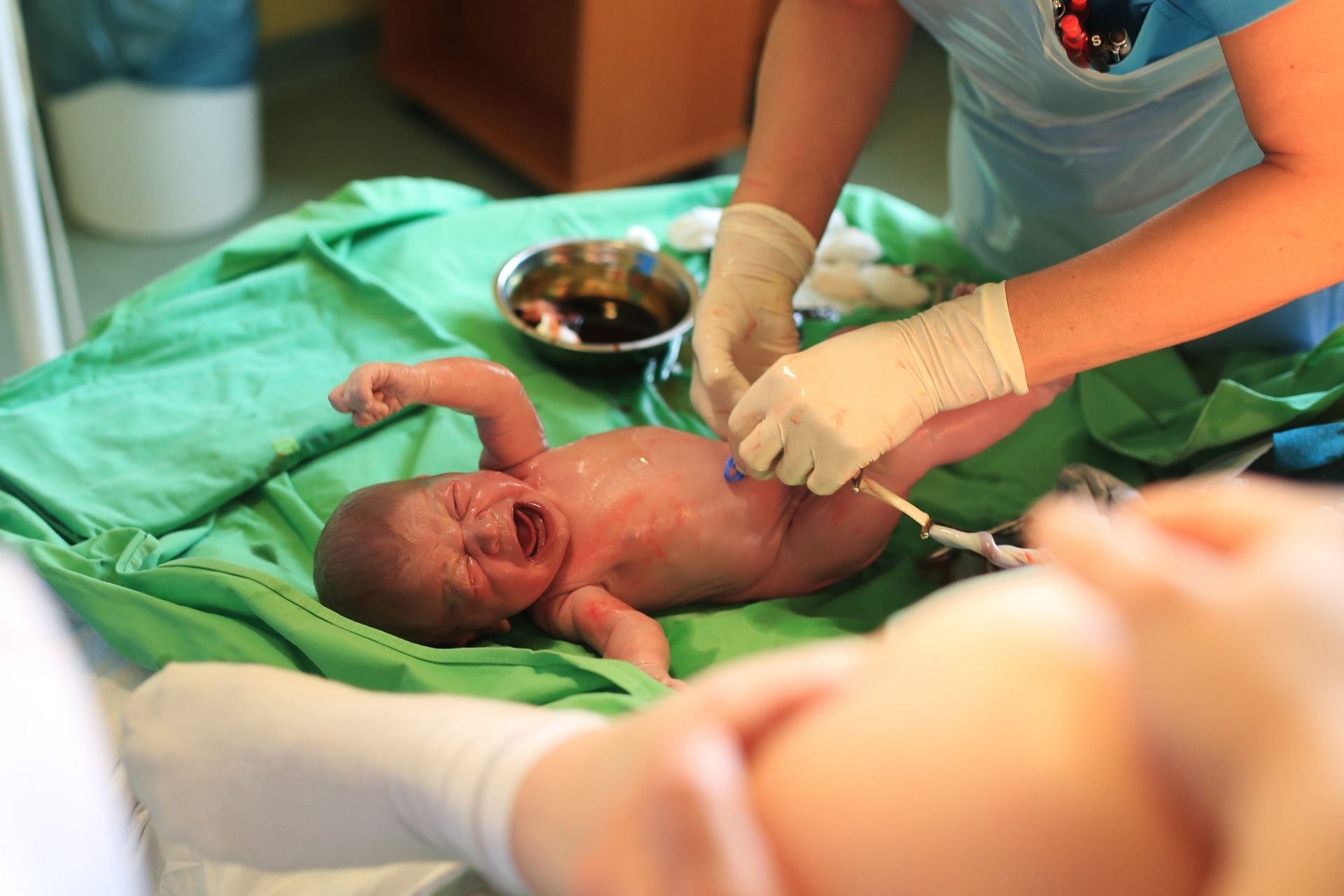
After the baby has breathed on his own, the doctor or nurse may cut the cord, leaving behind a stump that is clamped. The cord may also be cut by the baby’s father or whoever has been stated to do the honors in the birth plan.
It is usually better to delay cord clamping for a few seconds even minutes after birth so that the baby can breathe properly on his own.
Delayed cord clamping also ensures that the new infant gets vital nutrients from the placenta, it increases blood circulation, boosts hemoglobin levels, increases the baby’s iron store and red blood cells.
A minute after birth or when the cord has stopped pulsating (usually about 5 minutes after birth) the cord clamping can be done. Cord clamping is the separation of the infant from the placenta.
The process of delivery involves the passage of the baby from the mother’s birth canal to the outside world and the expelling of the placenta.
The baby, attached to the mother will have to be separated by cutting the cord and clamping. The stump left is clamped, and cleaned regularly, till it is dried and falls off (this usually takes about 2 weeks). You may choose to bank your baby’s cord for beneficial health reasons.
3. Skin-To-Skin Contact
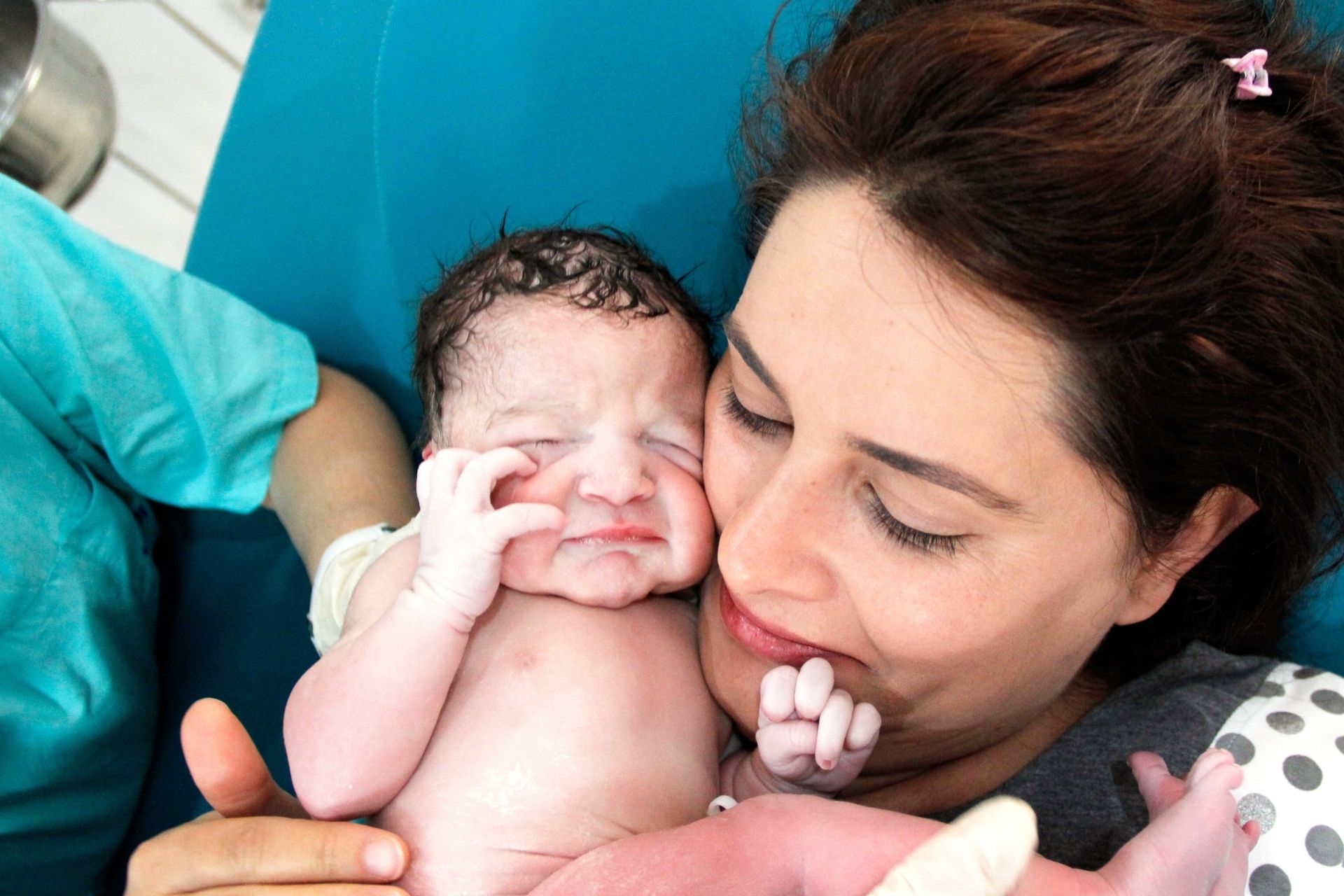
If you have had a vagina birth without any complications, the next thing that hospital staffs usually do after birth is to establish skin-to-skin contact with the baby, mother, and father.
Skin-to-skin contact is a practice of established contact with the child and parents soon after birth. It is very, very important and it is what will happen in the first 24-hours after birth.
Sometimes, even before the baby is cleaned, the nurses will place the baby on the mother’s chest or stomach area to allow him to feel the warmth of the mother. The baby can also be wrapped in a blanket before placing it on her chest.
Skin-to-skin contact helps to initiate bonding as early as possible. It also helps to keep the baby calm as he will be trying to adjust to different temperatures and changes in the environment so he may wail.
It improves psychological stability and increases maternal instincts. The first hours after birth is critical, so the skin-to-skin contact should not be missed for anything.
Not only will you cherish the one you have carried for 9 months and will want to finally hold him in your arms, but it would also make the child feel loved warmth, and security.
In a C-section birth, immediate skin-to-skin contact may be delayed because the woman may still be down with the anesthesia after the operation. But it doesn’t take too long, as soon as she is awake she can see her baby.
If the father is present at the labor ward, he will also be given the chance to hold the baby for the first time.
4. Cleaning The Baby

At birth babies, skins are coated with a white waxy material called the Vernix caseosa.
It doesn’t have to be washed off immediately from the baby’s body as the vernix caseosa act as a protective layer on the skin making it softer and helps to protect the baby’s immune system.
So instead of bathing the baby at birth, it is better to just rub in the Vernix caseosa inside the skin. According to the World Health Organisation, the Vernix caseosa can stay in the baby’s skin for 6 hours before bathing the baby.
Some women even wait for 24 hours before giving the baby the first bath. While still holding the baby and after clamping the cord the midwives can use a small towel to rub the skin and wrap the child up in the mother’s arm before wearing a sleepsuit, cap, mittens, and socks.
The first bath is usually done the next day. Babies born with meconium on their skin or with a condition called chorioamnionitis would need a thorough bath immediately after birth to reduce the risk of the baby getting an infection.
5. Delivery Of The Placenta

Delivery of the placenta is the 3rd stage of labor, and it is what happens the first 24-hours after birth. The placenta may not be delivered immediately after the baby is born sometimes it takes longer.
You will have to deliver the placenta for complete delivery. If the placenta is not delivered, or not delivered intact, it can cause some complications to the mother like excessive bleeding.
After delivery of the baby, the contraction of the uterus continues leading to an additional gush of blood then the placenta is expelled out. If it is C-section the doctor will remove the placenta from the uterus before stitching the incision site.
The nurse may massage the uterus to help the contraction of the uterus and expelling of the placenta if the placenta is not delivered within 30 to 60 minutes.
If the placenta is not removed, it can cause the condition called retained placenta leading to infection. It will have to be removed by surgery.
6. Nursing The Baby
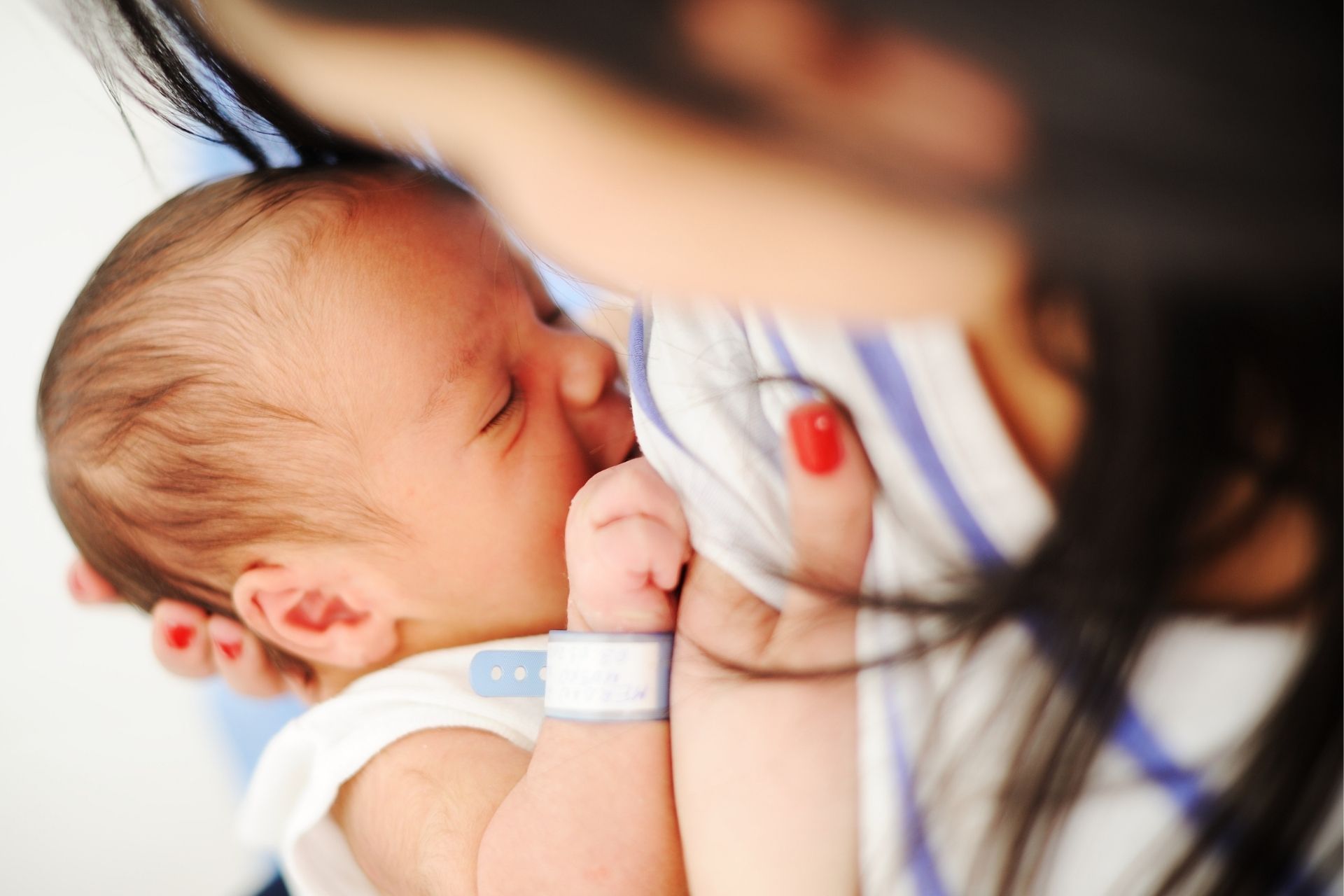
As you establish a skin to skin contact, what happens the first 24-hour after birth is the first nursing attempt. As early as possible, women are advised to put the baby on the breast to start sucking so the breastfeeding process can start.
The first milk the baby sucks is the colostrum a pale brown or pale-orange milky fluid that is rich in antibodies to help build the baby’s immune system.
Even If the colostrum has not started flowing, it is important to encourage your baby to suckle at the breast. It stimulates the letdown reflex (check my post on how to improve breast milk supply like to learn more).
As the baby suckles on the nipple, the receptor cells in the alveoli are stimulated, sending messages to the brain for milk production can start.
Putting the baby on the breast immediately after birth promotes bonding, encourages the baby to learn the latching position and how to suck. The woman also starts adjusting to the breastfeeding position that is suitable for her and her baby.
7. Stitching Up/ Episiotomy

After birth, the nurses will inspect the perineum to see if there is a tear. The tear in the perineum after birth is called Perineal lacerations.
If the baby’s head is too large and the vaginal did not stretch very well during labor, the vagina may tear when the baby was pushed out. It is usually common for first-time moms to experience vagina tears because they have not had a baby before.
If the vagina tear is small, it is nothing to worry about and there will be no need for stitches for it will heal on its own, but if it is a 3rd to 4th-degree tear (a tear that is close to the anus) an episiotomy will be needed.
During labor, the nurses may make a small cut on the perineum to make room for the passage of the baby and after delivery, it will have to be stitched. A local anesthetic is given to numb the area and reduce pains when stitching, during episiotomy.
8. Administering Preventive Drugs

Number 8 essential guide of what happens the first 24-hours after birth is the administration of preventive drugs. Newborn babies are given vitamin K at birth because they are deficient in the vitamin.
The deficiency can cause internal bleeding so a shot of vitamin k is given after birth as a preventative. A newborn will also be given an antibiotic drop (erythromycin ointment) in the eyes as a preventative against infections.
Hepatitis B vaccine will also be given. Hepatitis vaccine is usually given for the prevention of the hepatitis B virus which babies are usually at risk of.
9. Apgar Testing And Vitals Check

Right after birth, the Apgar test will be conducted for the baby, to determine the general condition of the baby and if there is any immediate health concern.
The first thing to check is the appearance that is the skin color. They check to see if it is normal. The next thing is the pulse, to determine how well the baby reacts to stimulation, then activity.
They test the spontaneous movements of the baby to show how active the baby is. Respiration, the baby’s breathing rate per minute is tested.
The Apgar test is rated on a scale of 0 to 10 and it is conducted the first 1 minute after birth and 5 minutes later. If A baby with a score below 7, doctors usually focus more attention on such a baby.
The baby’s vitals will also be checked. The heart rate, weight, length, head conference, feet. All these will be inspected and recorded. They will also check if the baby is looking OK and have no physical abnormalities, they check for internal injuries and check if the baby’s temperature is stable.
10. Rest
After stitching either for a vagina delivery or C-section the mother can place the baby on her chest and the hospital staff carry out the required test on the baby while she rests.
The baby will be cleaned, dressed, and kept at your bedside or the nursery. She might take a shower or be cleaned up. She will be a bit dizzy so you will be encouraged not to move around for a while.
She will be given a light meal and told to take lots of fluids and sleep to recover. Thereafter, she can be moved to the postpartum ward and after a day or 2 of close monitoring, she may be discharged.
Save this for later!
